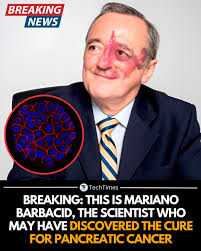

Recent developments involving Mariano Barbacid and his research on pancreatic cancer have made significant headlines in early 2026. While the results were hailed as a major breakthrough, they have also sparked considerable controversy regarding their publication and funding.
Here is the current situation as of May 2, 2026:
The Scientific Breakthrough (January 2026)
In late January 2026, Barbacid’s team at the CNIO (Spanish National Cancer Research Centre) published a study in the journal PNAS detailing a “triple therapy” that successfully eliminated pancreatic tumors in mice.
The Strategy: The therapy targets the KRAS gene (mutated in 90% of pancreatic cancers) from three different angles simultaneously.
The Results: In mouse models, the tumors disappeared completely and permanently without developing resistance or significant side effects. This was widely reported as “unprecedented” because pancreatic cancer is notoriously resistant to treatment.
The Controversy and Retraction (February 2026)
Shortly after the initial excitement, the journal PNAS retracted the article in February 2026.
The Reason: The retraction was due to an undisclosed conflict of interest. It was revealed that Barbacid and two co-authors held financial interests in Vega Oncotargets, a company created to develop these specific therapies.
Scientific Validity: Despite the retraction, the team maintains that the experimental data and the success in the mouse models remain scientifically sound; the issue was purely ethical/administrative regarding disclosure.
Current Status: Funding and Human Trials
As of today, the research faces a significant hurdle in moving from mice to humans:
The “Valley of Death”: Moving to Phase 1 clinical trials requires approximately €30 million. Since this is a high-risk translational phase, secured public funding has been difficult to obtain.
Crowdfunding: In early February 2026, the project turned to a high-profile crowdfunding campaign to raise the initial €3.5 million needed for toxicology studies and drug manufacturing.
Timeline: Even if funding is secured immediately, Barbacid has clarified that it will take at least 2 to 3 years before the first human volunteers can begin clinical trials.
Summary Table
Feature Status (May 2026)
Research Stage Preclinical (Mice/Xenografts only)
Success Rate 100% regression in specific mouse models
Publication Status Retracted by PNAS (Conflict of Interest)
Funding Needed ~€30 million for Phase 1 trials
Availability Not yet available for patients
Export to Sheets
Note for Patients: Both the CNIO and Barbacid have issued statements urging caution, as the “miracle” headlines in the media have led to a flood of requests from desperate patients. They emphasize that while the results are a historic step forward, the therapy is not yet ready for human use.